
Skip to content
SIZA Robotics

Weeding robot: mechanical, laser or targeted?

Fewer approved herbicides, fewer people available: weeding has become the main driver of agricultural robotics. An overview of the technologies, what they are worth in the field, and where a tool carrier like TOOGO fits in.

Updated 25 September 2026

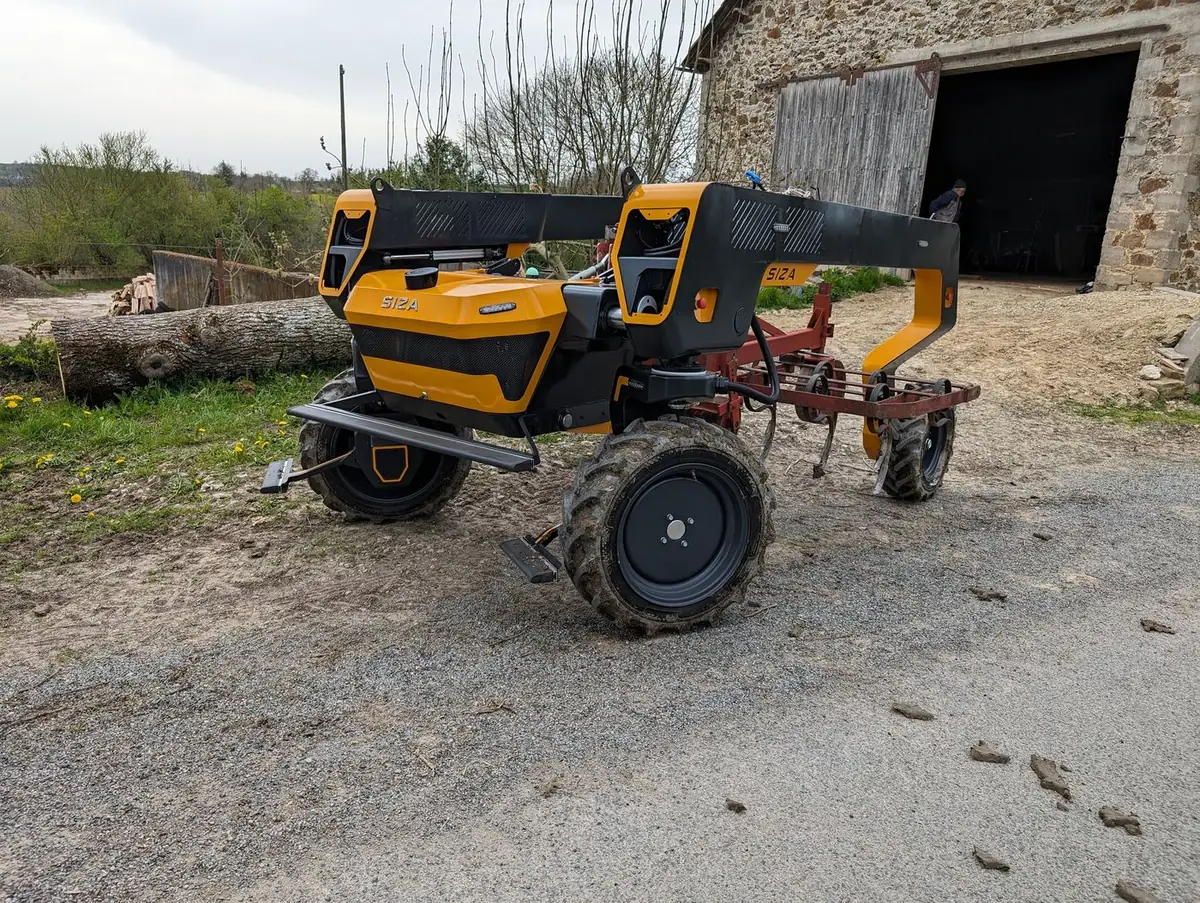
TOOGO with a mechanical weeding tool hitched in the centre

Why now

Weeding: where things get stuck.

Chemicals are in retreat. France's Écophyto 2030 strategy targets a 50% cut in the use and risks of plant protection products.1 Since 2020, glyphosate has been banned in the inter-row of vineyards and orchards in France.2 In sugar beet, several herbicides have been withdrawn or are under threat.3

Hand weeding is expensive. In organic field vegetables in France, hand weeding takes an average of 12 h/ha/year, compared with 2.4 h/ha/year for mechanical weeding, or a quarter to half of the time spent on the plots.4 It is coming back in conventional production too: up to 77 h/ha for carrots in Normandy.5

Labour is short. In 2023, 57% of planned agricultural recruitments in France were considered difficult to fill.6 A robot does not replace a team, but it takes on the repetitive passes.

The technologies

Four ways to weed with a robot.

Mechanical

Inter-row hoes with shares or blades, finger weeders, tine weeder, rotary hoe. The most widespread and most proven technique, compatible with organic farming. According to the ITB, these tools cut the herbicide TFI by 40 to 50% in sugar beet.7

Limitations: aggressive on young crops (before the 4-leaf stage in sugar beet), weather-dependent: you need 2 to 3 dry days after hoeing.8

Examples: TOOGO (with your own tools), Naïo Oz, Carré Anatis, FarmDroid FD20, Farming Revolution.
Laser

A camera and artificial intelligence locate each weed, and a laser destroys it. No chemicals, no soil disturbance.

Limitations: high investment (a 3.60 m model is listed at €355,000)9, output limited by the number of lasers.

Example: Pixelfarming Robot One.

Micro-spraying

The robot places a droplet of herbicide on each weed it identifies. The volumes used are tiny compared with a broadcast application.

Limitations: still chemical, so not compatible with organic farming; distribution still limited in France.10

Example: Kilter AX-1.

Targeted spraying

A boom fitted with cameras treats plant by plant. Often tractor-mounted rather than autonomous. Combined with hoeing, band treatment on the row cuts herbicides by 50 to 66% in sugar beet according to the ITB.7

Limitations: still chemical; needs a tractor and a driver.

Example: Ecorobotix ARA.

In short

The comparison.

MechanicalLaserMicro-sprayingTargeted spraying
Zero chemicalsYesYesNoNo
Organic-compatibleYesYesNoNo
Soil disturbanceYes (beneficial or not depending on the soil)NoNoNo
Weather sensitivityHigh (soil must be dry enough)MediumMediumMedium (wind)
Other uses for the machineWith a tool carrier: drilling, soil cultivation, mulchingNoNoThe tractor, yes

Our approach

A robot that weeds… and does everything else too.

A specialised weeding robot is often used for only a few weeks a year. That is what weighs on its profitability: in sugar beet, an ARTB-ITB study measured +32% in mechanisation costs for a specialised robot, despite €167/ha saved on herbicides.11

TOOGO turns the problem around: it is a tool carrier. It weeds with your inter-row hoe, tine weeder or finger weeders, guided to ±2 cm by RTK and kept centred by the side-shifting frame. Then it drills, cultivates the soil and mulches. More weeks of use, fewer tools to buy again.

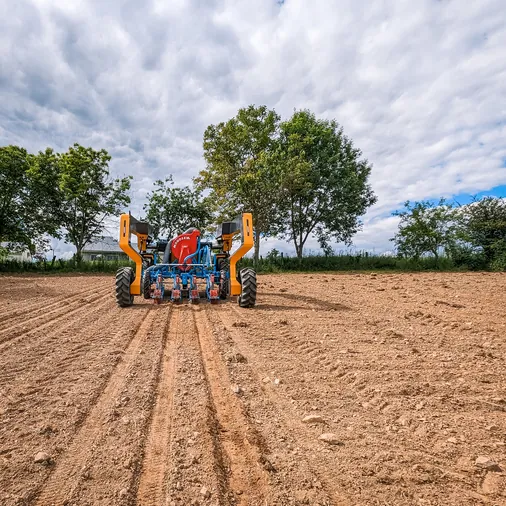
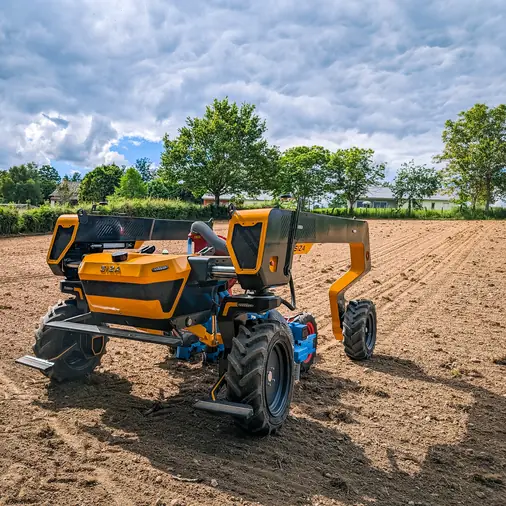
TOOGO driving in a straight line on a plot Three-quarter rear view of TOOGO, tool hitched in the centre

FAQ

Robotic weeding

Does a weeding robot eliminate all herbicides?

Not necessarily. A mechanical weeding robot can do without them entirely, particularly in organic systems. In conventional farming, hoeing is often combined with band spraying on the row: the ITB then measures 50 to 66% less herbicide in sugar beet.

What is the most widespread robotic weeding technology?

Mechanical weeding (hoeing, finger weeders, tine weeder), guided by RTK and sometimes by camera. Laser and micro-spraying are more recent.

How much time does hand weeding take in vegetables?

In organic field vegetables in France, an average of 12 h/ha/year, compared with 2.4 h/ha/year for mechanical weeding (VivLéBio2 project). In conventional production, up to 77 h/ha for carrots in Normandy.

Is TOOGO a weeding robot?

It is a tool carrier: it weeds with the inter-row hoe, tine weeder or finger weeders you hitch to it, guided to ±2 cm. And it is also used for drilling, soil cultivation and mulching.

Sources

  1. OFB, « Stratégie Écophyto 2030 », May 2024 (in French). Link
  2. Réussir, ANSES decision on glyphosate, 09/10/2020 (in French). Link
  3. Le Betteravier français, « Adapter le désherbage en 2025 », 10/03/2025 (in French). Link
  4. Action Agricole Picarde, VivLéBio2 project, 20/09/2021 (in French). Link
  5. Agra Presse, « Légumes : le retour du désherbage manuel » (in French). Link
  6. Réussir Fruits & Légumes, based on the BMO 2023 survey, 11/07/2023 (in French). Link
  7. ITB, « Quel matériel de désherbage mécanique choisir ? », 12/04/2019 (in French). Link
  8. Arvalis, « Maïs : réduire l'utilisation d'herbicides grâce au binage », 11/05/2023 (in French). Link
  9. Future Farming, « Pixelfarming Robot One: chemical-free weed control ». Link
  10. AgTechNavigator, « Kubota partners with Kilter to pilot ultra-precise weeding robot AX-1 », 13/11/2025. Link
  11. Le Betteravier français, « Robot FarmDroid : quelle place en betterave conventionnelle ? », 16/03/2026 (in French). Link

Weed with your own tools, with no driver.

A TOOGO demo on your farm.

Book a demo